
Which Breast Procedure Is Right for You?

The right procedure depends on what is causing your concern, not on a fixed menu. Here is a quick guide.

  • Breast augmentation adds volume with implants. It suits patients whose main concern is size or fullness.
  • Breast lift raises and reshapes breasts that have descended, without adding implants.
  • Breast augmentation with lift adds volume and lifts sagging breasts in a single procedure. It suits patients who have lost both fullness and position.
  • Breast reduction removes tissue and skin to reduce size and weight.
  • Breast asymmetry correction balances differences in size, shape, or position between the two sides.
  • Breast implant revision replaces, repositions, or removes existing implants.
  • Gynecomastia surgery removes excess glandular tissue in men for a flatter, more defined chest.

Many patients need more than one procedure, and some need a staged approach. Dr. Chivers will explain which combination fits your anatomy at your consultation.

Who Breast Surgery Is For

Feeling too small
Feeling too heavy
Feeling uneven

Patients who consider breast surgery usually come from one of a few situations. Some feel their breasts are smaller than their frame or have lost volume after pregnancy, breastfeeding, or weight changes. Others have breasts that sit lower or looser than they would like, often because of aging, gravity, or hormonal change. Some carry breasts large enough to cause neck or back pain, shoulder grooving, skin irritation under the breast fold, or difficulty with exercise and clothing. Others notice a clear difference in size, shape, or position between the two sides. Men with gynecomastia form a separate group, and many seek surgery because they want their chest to look and feel the way they expect.

Good candidates are generally in good overall health, have realistic expectations, and understand the recovery process. Pregnancy plans, breastfeeding goals, and existing implants all affect timing and procedure choice.

How Your Procedure Is Chosen

Dr. Chivers assesses breast volume, nipple position, skin elasticity, the degree of sagging, chest wall shape, and your goals. Measurements and photographs taken at consultation help show which options are realistic and which would not give you the result you hope for. This assessment is what turns a list of procedures into a plan that is right for you.

  • Volume
  • Position
  • Size
  • Asymmetry
  • Implants
  • Chest contour
Treatment room at Canadian Plastic Surgery Centre

What Happens at Your Consultation

Your first visit is a conversation, not a sales appointment. You will discuss your history and goals, undergo a physical examination, and review photographs and measurements. Dr. Chivers will explain the options, the risks, and the expected recovery for each. You are welcome to ask questions and take time before making a decision.


Recovery After Breast Surgery

  1. First days
  2. Week one
  3. Weeks four to six
  4. Months three to six

Recovery varies by procedure, but most breast surgeries follow a similar pattern. The first few days involve soreness, tightness, and swelling, managed with prescribed medication and supportive garments. Most patients return to desk work within one to two weeks. Heavy lifting, strenuous exercise, and overhead movement are restricted for several weeks, and low-impact activity usually resumes first. Scars fade noticeably over 12 to 18 months, and final shape and softness can take several months to settle.

Breast reduction and lift procedures generally involve more tissue manipulation and longer recovery than a straightforward augmentation. Revision recovery depends on what is being corrected. Your team schedules follow-up visits throughout healing so changes can be monitored and concerns addressed early.

Combining Breast Procedures

The most common combination is breast augmentation with lift, which restores volume and position in one operation. Some patients pair a breast lift with asymmetry correction. Gynecomastia surgery is sometimes performed alongside other chest or body procedures. Combining procedures can reduce the number of times you go under anesthesia, but it also lengthens the operation and recovery, so the decision is made carefully after a full assessment.

Dr. Quinton Chivers in surgical scrubs at Canadian Plastic Surgery Centre

Why Choose Dr. Chivers for Breast Surgery in Toronto?

FRCSCUniversity of Toronto

Dr. Quinton Chivers is board-certified by the Royal College of Physicians and Surgeons of Canada (FRCSC). His training includes more than 15 years of post-secondary medical education, an aesthetic surgery fellowship, and a microsurgery fellowship at the University of Toronto. He also served as the designated plastic surgeon for the Canadian Armed Forces. Breast surgery is a primary focus of his practice.

He holds hospital privileges at Scarborough Health Network, Trillium Health Partners, and Mackenzie Health, and holds a lectureship with the University of Toronto’s Division of Plastic Surgery. Patients travel to Toronto from across the GTA and Ontario for procedures that are individually planned and clearly explained.

Breast Surgery FAQs in Toronto

How do I know which breast procedure is right for me?

The right procedure depends on whether your main concern is volume, position, size, asymmetry, implant problems, or chest contour. Your consultation includes a physical assessment so the recommendation is based on your anatomy.

Can breast augmentation and breast lift be done together?

Yes. Combining them is common for patients who want both fullness and lift. Dr. Chivers will confirm whether it is appropriate for you.

Is breast surgery covered by OHIP?

Most cosmetic breast procedures are not covered by OHIP. Some procedures performed for medical reasons may be eligible. Confirm your situation during consultation.

Will I have visible scars?

Incisions are placed to be as discreet as possible, often in the breast fold or around the areola depending on the procedure. Scars fade substantially over 12 to 18 months and are usually concealed by most clothing and swimwear.

How long does recovery take?

Most patients return to desk work within one to two weeks, with heavier activity restricted for several weeks. Full results take several months to settle.

Can men receive treatment for gynecomastia in Toronto?

Yes. Gynecomastia surgery is a dedicated procedure for men who want a flatter, more defined chest. A consultation determines whether tissue removal, skin removal, or both are needed.

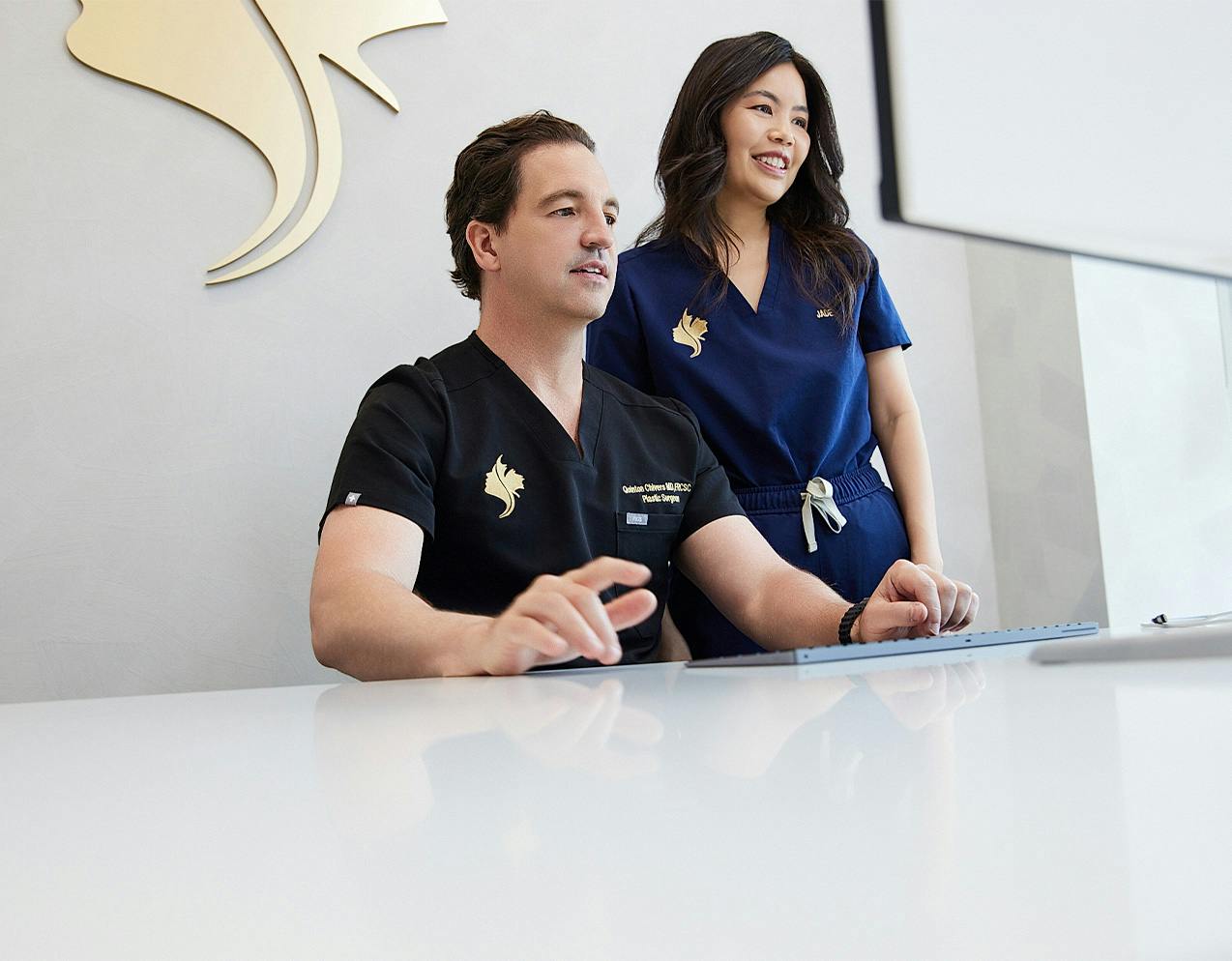
Dr. Quinton Chivers and a colleague at the CPSC consultation desk

Book a Breast Surgery Consultation in Toronto

If you are considering any breast procedure in Toronto or the GTA, book a consultation with Dr. Chivers to discuss your anatomy, goals, and options.

Book a Free Consultation
Contact us media
Accessibility: If you are vision-impaired or have some other impairment covered by the Americans with Disabilities Act or a similar law, and you wish to discuss potential accommodations related to using this website, please contact our Accessibility Manager at (437) 523-4196.
Contact Us